What Are Ceramic Coatings?
Ceramic coatings are liquid polymer solutions applied to a vehicle’s exterior to create a semi-permanent, protective layer. This coating chemically bonds with the paint, forming a hydrophobic surface that repels water, dirt, and other contaminants. Unlike traditional waxes or sealants, it can last for years with proper care, offering enhanced resistance to UV rays, oxidation, and minor scratches. In regions with varying weather conditions, many vehicle owners consider ceramic coating for cars in Killeen, TX, as a way to maintain a cleaner and more polished appearance. While it does not make a vehicle entirely maintenance-free, it can reduce the frequency of washes and improve long-term paint preservation. The result is a finish that stays glossier for longer periods.
The Appeal of DIY Ceramic Kits
The rising popularity of home ceramic coating kits is understandable. Enthusiasts are drawn to saving on labor by doing it themselves. Retailers market these kits as easy, promising shiny, protected paint at a lower cost than professionals. Buying online or in auto shops makes DIY projects seem accessible. However, the process can be more complex. The myth of “just wipe on and buff” misleads owners into expecting high-quality results with minimal effort, but the reality often falls short. After reviewing the basics of available options, many consumers start looking for automotive ceramic coating near me once they realize what’s truly involved in achieving flawless, lasting protection.
Common Missteps in DIY Applications
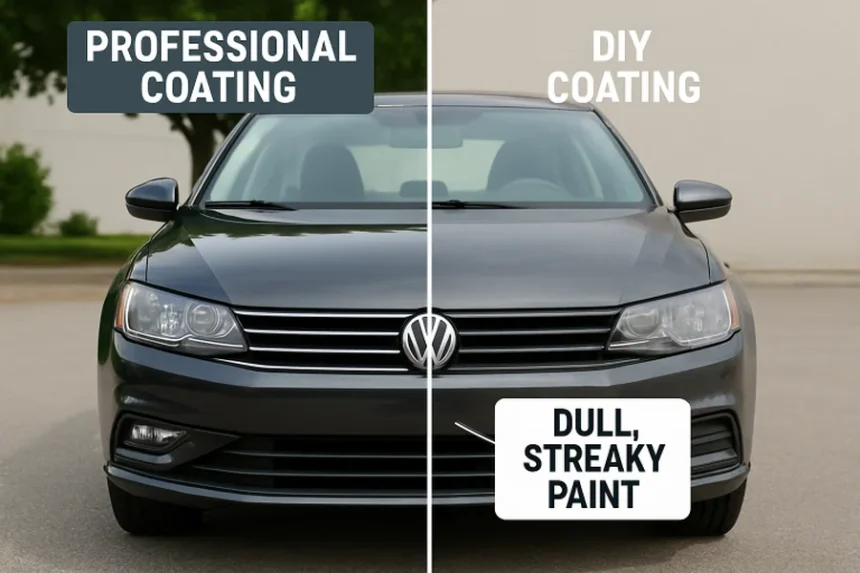
DIY ceramic coating kits often lead to errors, such as insufficient surface preparation, uneven application, and underestimated curing and drying periods. Insufficient surface preparation can cause streaks, hazing, and premature failure, while uneven application can result in unsightly “high spots.” Additionally, DIYers may underestimate the required curing and drying periods, exposing their vehicles to water or dust prematurely.
Why Professional Application Matters
The key difference between a well-applied ceramic coating and a flawed one lies in experience and equipment. Professionals use trained eyes, controlled environments, and specialized tools like infrared lamps to ensure even, full coverage, maximizing protection and appearance. A professional application not only offers longer-lasting, glossy results but also prevents costly errors common with DIY kits. The assurance of professional expertise makes the extra cost worthwhile.
Health and Safety Concerns
Many DIYers neglect safety when applying ceramic coatings, risking skin, eye, and lung irritation from potent chemicals. Using proper ventilation, gloves, and respirators is essential, but homeowners often skip safety gear, risking headaches, allergies, or respiratory issues. Professionals are trained and equipped to apply safely, minimizing risks to themselves and the vehicle.
Best Practices for Coating Care
Whether you decide to use a DIY kit or hire a professional, pre-application cleaning and decontamination are non-negotiable. Always thoroughly wash, clay bar, and polish the vehicle’s paint to eliminate embedded contaminants. During application, follow instructions to the letter, use the recommended protective equipment, and work in a ventilated, dust-free environment. Test on a small, inconspicuous area first and be vigilant about the drying and curing timeline.
Final Thoughts
Ceramic coatings are powerful tools for maintaining automotive value and curb appeal, but success hinges on the quality of the application. While DIY kits offer an accessible entry point, the risks—misapplication, health hazards, and irreversible paint damage—should not be underestimated. For many vehicle owners, turning to an experienced professional is the most effective path for flawless, worry-free protection and peace of mind.